A project slips when the right electrician, welder, or HVAC tech is missing on Monday morning. That is why finding the best construction hiring platform is not a branding exercise. It is an operations decision that affects schedule, labor costs, safety, and client confidence.
Construction hiring is different from office hiring in one big way: proof matters more than polish. A generic resume rarely tells you whether someone can read plans, show up ready, carry the right license, or handle real jobsite conditions. The best platforms for this industry understand that. They are built around verified skills, trade-specific experience, and fast communication, not broad applicant volume.
What makes the best construction hiring platform
If a platform serves every industry equally, it usually serves construction poorly. Skilled trades hiring runs on urgency, trust, and role fit. Employers do not need a pile of vague applications. They need qualified people who can get to work fast and do the job right.
That changes what "best" means. In construction, the best platform is the one that reduces bad interviews, shortens time to hire, and gives employers more confidence before the first call. For workers, it should do more than list jobs. It should help them prove their experience, get seen for the right roles, and move faster toward better-paying work.
A strong construction hiring platform usually gets five things right. It focuses on trades instead of trying to be everything to everyone. It verifies key details like licenses, employment history, and background information where relevant. It lets workers show project portfolios so employers can see actual work, not just job titles. It uses matching tools that understand role requirements. And it keeps communication mobile and immediate because most hiring in this industry does not happen from a desk.
Why generic job boards fall short
A large job board can generate volume, but volume is not the same as hiring efficiency. In construction, too much volume often creates more screening work for already stretched project teams and recruiters. You may get applications quickly, but if half the applicants have the wrong experience or cannot verify their credentials, speed disappears.
There is also a practical problem. Many generic platforms are built around white-collar hiring signals such as keyword-heavy resumes, polished profiles, and long-form applications. Those signals can miss the best tradespeople entirely. A journeyman plumber with strong field experience and a solid portfolio may be a far better hire than someone with a cleaner resume and less proven work.
Workers feel that gap too. Skilled tradespeople do not want to spend hours reformatting experience into systems that were not built for their world. They want a straightforward way to show what they do, where they have worked, and what they can build, install, repair, or manage.
The features that actually matter
When evaluating the best construction hiring platform, start with verification. If a profile says licensed electrician or certified welder, employers should be able to trust that claim. Verification does not replace interviews or skill checks, but it removes a lot of uncertainty early in the process.
Next is portfolio visibility. In construction, finished work tells a stronger story than generic descriptions. Photos of completed installs, framing work, pipe runs, finish carpentry, masonry, or fabrication projects can help employers assess quality and fit much faster. This is especially useful when hiring for specialized roles or customer-facing work where craftsmanship matters.
Matching quality matters just as much as candidate volume. AI-powered matching can be valuable if it is trained around the realities of skilled trades hiring, such as licenses, union or non-union background, years in trade, location, project type, and equipment familiarity. If the matching is too broad, employers still end up doing all the sorting themselves.
Communication speed is another make-or-break factor. Construction hiring often moves in hours, not weeks. A platform with direct messaging and mobile-first workflows gives both sides a better chance to connect before the opportunity goes cold. The best systems reduce back-and-forth, not add more steps.
Best construction hiring platform for employers
For employers, the right platform should feel like a hiring tool, not a marketing channel. You should be able to post roles quickly, identify qualified tradespeople without guessing, and move from search to conversation without friction. That is the real test.
A good platform also needs to support different hiring realities. A commercial contractor staffing a fast-moving build has different needs than a service company hiring long-term HVAC technicians. A subcontractor may need project-based labor now, while a growing firm may want to build a steady pipeline for future crews. The best platform can handle both urgent needs and ongoing workforce planning.
This is where specialization pays off. A construction-specific marketplace can improve outcomes by narrowing the field to workers who actually belong in the field. Instead of screening out irrelevant applicants, employers spend more time speaking with people who match the role.
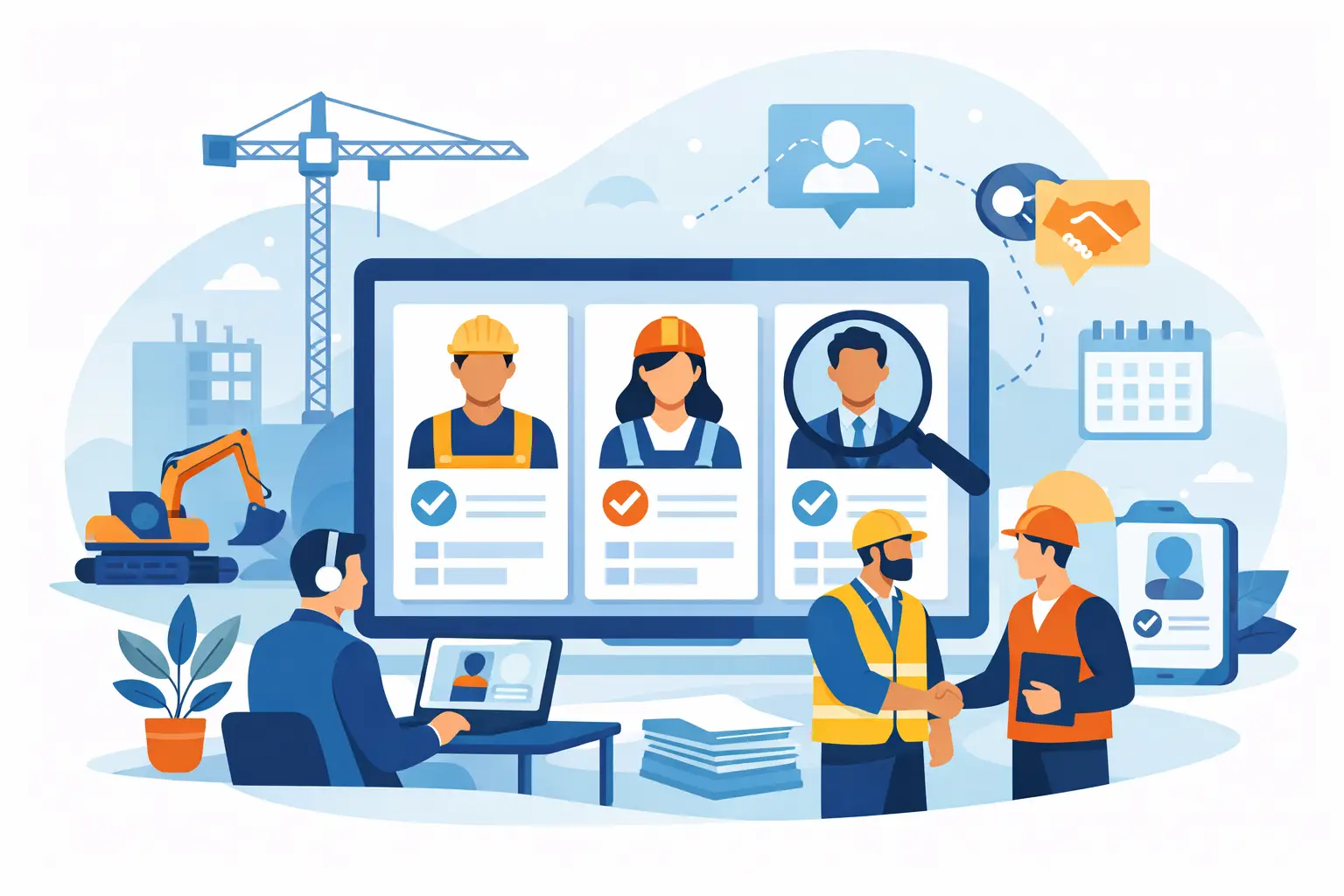
Platforms like go2work are built around that idea: verified worker profiles, trade-specific matching, project portfolios, and direct messaging in one workflow. That kind of structure helps employers hire faster with more confidence, especially when downtime on a project has a direct cost.
Best construction hiring platform for skilled tradespeople
Workers judge a platform by different standards. They want access to real jobs, fast responses, and a fair shot at roles that match their trade and experience. They also want a better way to stand out than a one-page resume that strips away the quality of their work.
That is why profile strength matters. A strong trades platform should let workers highlight licenses, certifications, years in trade, specialties, and completed projects. For many roles, that is more useful than a traditional application. A foreman hiring a carpenter or pipefitter wants to know what that person has actually done, not just where they worked.
There is also a trust factor. Workers are more likely to engage when the jobs feel legitimate, the employers are identifiable, and the process does not waste time. Direct messaging, clear job details, and a mobile-friendly setup all help. If applying takes too long or communication is poor, good workers move on fast.
The trade-off is that specialized platforms may have fewer total listings than giant job boards. But that is not always a negative. If the listings are more relevant and the employers are more serious, the path to a real offer can be much shorter.
How to evaluate a platform before you commit
Start by looking at fit, not hype. Ask whether the platform is truly built for construction or whether construction is just one category among hundreds. Then look at how it handles verification, portfolios, messaging, and mobile use.
For employers, it helps to measure practical outcomes. How quickly can you post a job? How many qualified matches do you get in the first 48 hours? Can you filter by trade, license, location, and experience level? Can you contact candidates directly? Those answers matter more than flashy claims.
For workers, the right questions are simpler. Can you build a profile that reflects your actual skill set? Can you show your work? Are the jobs relevant to your trade and location? Can you get in touch with employers without jumping through hoops? If the answer is yes, the platform is probably aligned with how construction hiring really works.
The real decision: faster hiring or more filtering
Every hiring platform promises access. The difference is what happens after access. On a generic board, more applicants often means more filtering. On a construction-specific platform, fewer but better-matched candidates can lead to faster interviews and faster starts.
That does not mean one approach is always right. A national firm hiring across many functions may still use broad job boards as one channel. But if the goal is to fill trade roles efficiently, reduce uncertainty, and hire with better evidence, a specialized platform is usually the stronger option.
The best construction hiring platform is the one that respects how this industry actually hires - fast, field-driven, and based on proven skill. When a platform is built around that reality, employers make better hires and skilled workers get seen for the value they bring. That is where momentum starts to build.